Timeline
Aug – Dec 2025 · ~2 months build
Team
PMs, designers, developers, data scientists
Role
AI Product Design Intern · end to end
iOS / SwiftUI
Design systems
Figma to production
Component libraries
AI interaction
Shipped & live
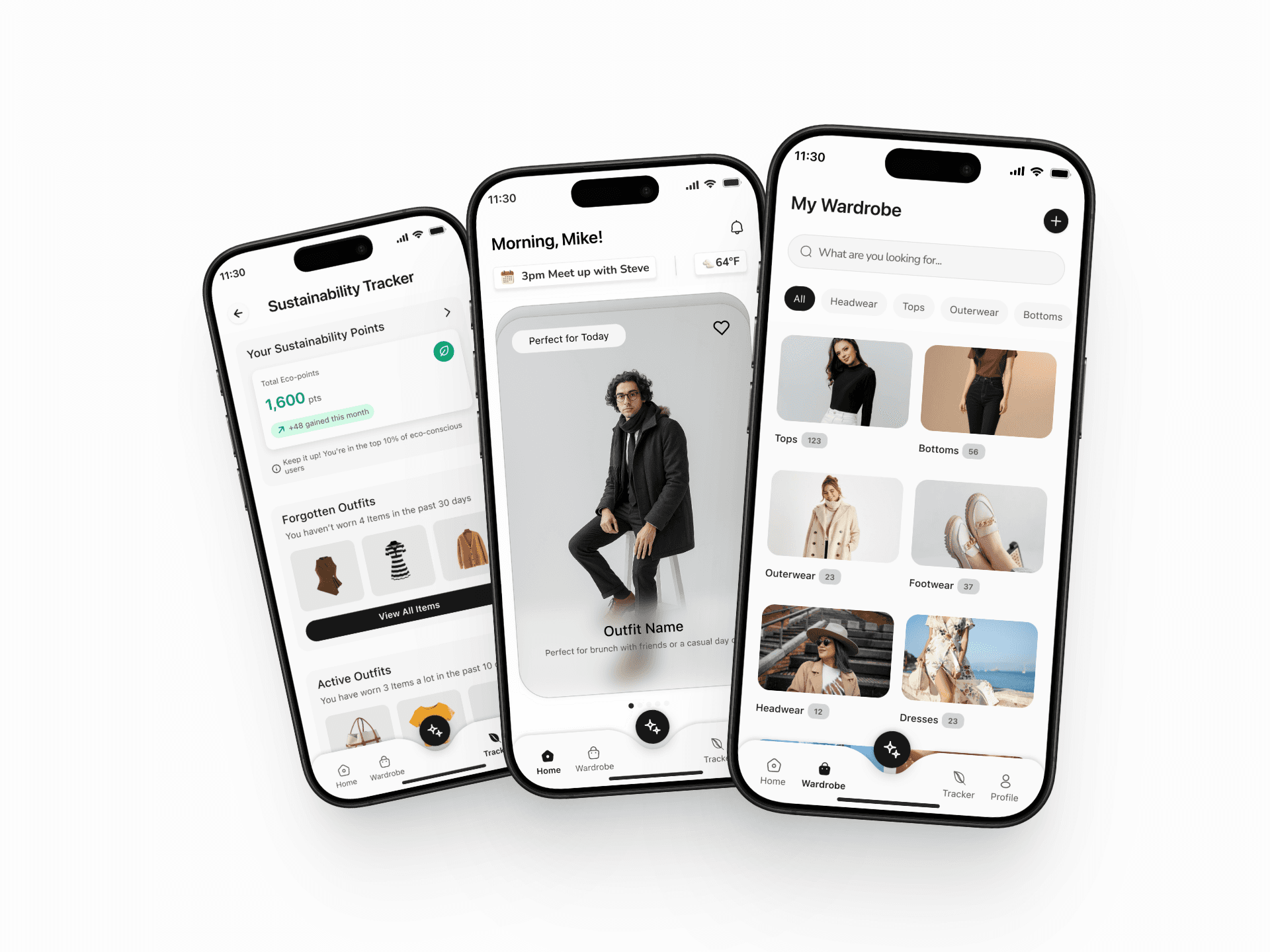
Context
Young professionals aged 18 to 40 own full wardrobes and still lose time every morning deciding what to wear. They browse, they stall, and often they give up and buy something new, which leaves closets full of clothes that never get worn. It isn't a shortage of clothes. It's the weight of the decision. StylePilot exists to take that weight off, using the wardrobe you already have.
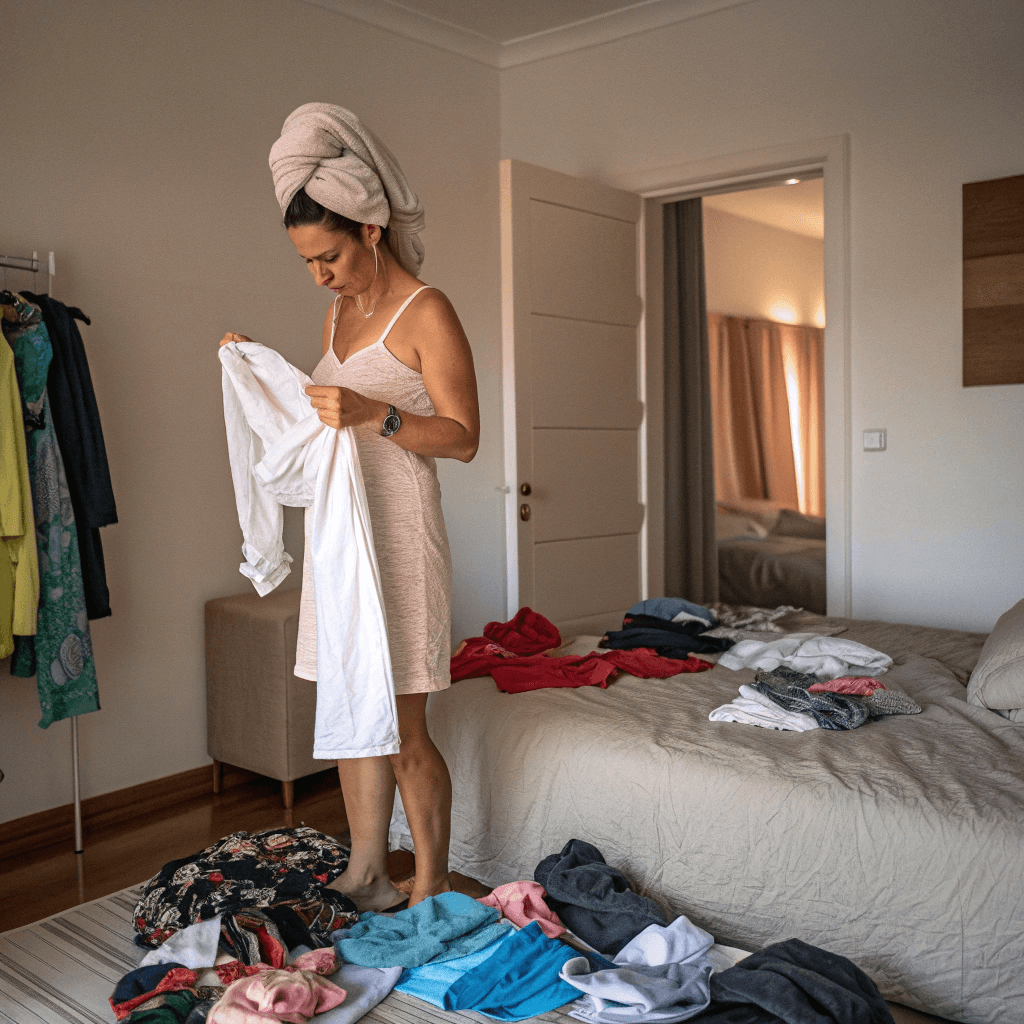
How I worked
Short timelines tempt a team to skip straight to building. I pushed to talk to people first. I ran interviews (10 of 22 myself), led the competitor analysis, and journey-mapped the pattern. Two findings shaped the whole product. Most people were trying to re-wear what they already owned rather than buy more, so the product had to start from your existing wardrobe. And trust in an AI stylist hinged on seeing the outfit before committing, which is why virtual try-on became a first-class feature, not a nice-to-have.
Reuse over new purchase
Most interviewees actively tried to restyle what they owned instead of buying new. The product's core promise follows directly: outfits from your own closet.
From 22 user interviews plus competitor analysis. Sample is small, so I treat these as direction, not proof.
The turn
What rigid styling AI does
It matches items and hands you a result. No context, no way to see it on yourself, no reason to believe it. People we spoke to bounced off that the moment the pick felt off.
What we built instead
Context-aware styling from your real wardrobe, tied to mood, weather, and calendar, with virtual try-on to build trust before you commit. Context beat generic matching, and trust got designed in on purpose.
Interface decisions
50+ screens · IA for 7 core features · 15+ user flows · minimal, confident aesthetic
Scan

AI instant wardrobe recognition and categorize
Style

Context- aware outfit generation based on mood.
Try

Virtual try-on before wearing them.
Track

Carbon savings from reusing vs buying
Scan, style, try, track · the four-step loop the product turns on

The product's design system

The decision I'm proud of
People don't trust an AI stylist because you tell them to. They trust it when the outfit in front of them looks right on a real body. So I made the interface almost disappear: minimal chrome, generous space, and one large, high-quality outfit image as the center of gravity on every key screen. The design's job was to get out of the way and let the clothes make the case. That's also why virtual try-on earned a first-class spot. Seeing it on you is the trust-builder, and no amount of clever UI substitutes for it.
Two months, no shared system
More controls
More text
Explanations
Confidence scores
Constant rework
Two months, one shared system
Seeing it on you

The obvious build
Looks productive on day one
Everyone draws their own way
Drift by week three
Rework before the finish
Fast to show, slow to ship.
Start with the system · what I chose
Tokens and components first
Slow to show in week one, coherent at the finish. The whole team builds on one foundation and the product holds together.
Result
50+
Screens across 7 core features
22
User interviews behind the design
7
Interfaces shipped into public beta
StylePilot shipped to public beta as a full team product. In validation, most users rated wardrobe digitization useful and expressed real interest in virtual try-on, and they expected outfit planning to get meaningfully faster. Those are interest and expectation figures from research, not measured outcomes from a launched app, and I'd want to instrument the product and measure the real numbers before claiming them. What I can stand behind is concrete: 50+ screens across 7 features, a shared design system, and an AI chatbot experience, all owned end to end as the design intern.
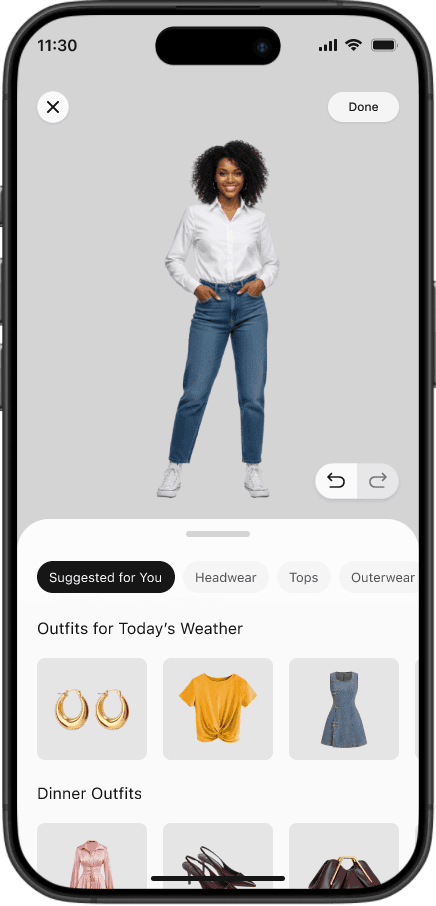
The product

The interaction

The planning
What I'd build next
01
Earlier user testing of core flows
I ran research up front, but I'd put clickable flows in front of users sooner, so the core paths get validated while there's still time to change them.
02
More aggressive MVP scope reduction
Seven interfaces is a lot for a two-month beta. I'd cut harder to a smaller, sharper core and let the rest wait.
03
Deeper AI error-state design
The happy path is solid. The next version needs the moments where the AI is unsure or wrong, designed with the same care as the moments where it's right.

Meet the main PMs of the team


