ux design
Museum
Freetown village
AR/VR platform bridging physical and digital cultural experience

My role
UX Researcher, Product Designer, System Architect
My role
UX Researcher, Product Designer, System Architect
Timeline
November - December 2025
Timeline
November - December 2025
Company
Freetown village Museum
Company
Freetown village Museum
Problem
People don't have a capability problem. They have a "content doesn't work" problem.
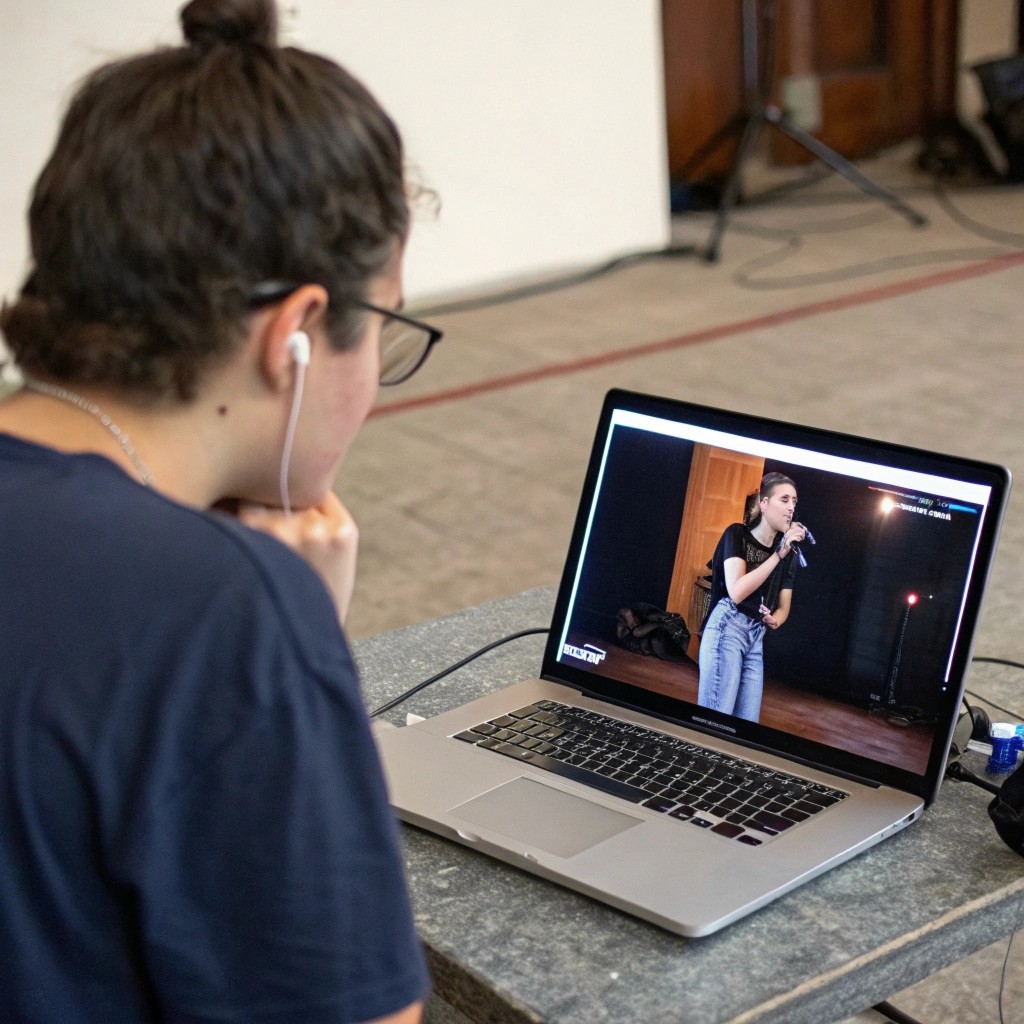
Young professionals (ages 20-35) are tech-comfortable but rarely engage with digital cultural events. Despite high technical literacy, 73% rarely or never attend online cultural experiences. Freetown Village, a 40+ year-old living history museum, struggled to reach younger audiences beyond their 25-60 person in-person performances.
Key Research Insights
Virtual Engagement Paradox
Evidence: 73% rarely attend online events despite 60% tech comfort
AR/VR created emotional resonanace passive videos
Immersion Creates Connection
Evidence: "I would love to interact more with this" - VR museum created emotional resonance
Musuem -style exploration lets users feel history, not just watch it.
Mobile First is Essential
Evidence: "Not everyone has a Meta Quest" - all have smartphones
AR via smartphones is primary access, VR is premium enhancement
Community Drives Retention
Evidence: "Would love to show friends and family" - AR scavenger moments highly shareable
Collectible cards and scavenger rewards create social engagement
Solution
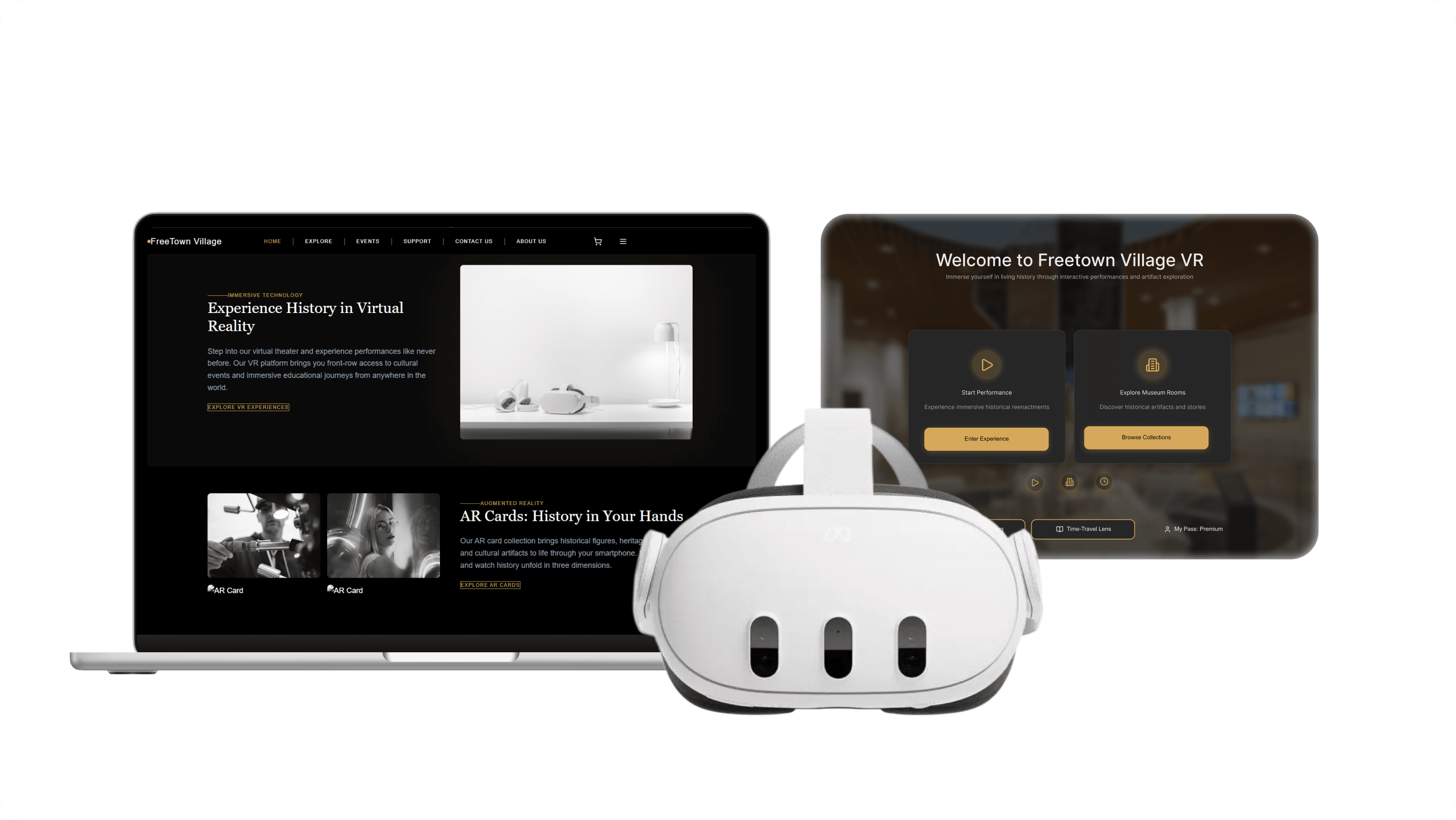
Freetown village :AR/VR
Freetown Village AR/VR Platform is an immersive digital experience that bridges physical and digital worlds. Users access AR content via smartphones (character cards, heritage buildings, scavenger hunts) and VR experiences via headsets (virtual museum, live performances, emotional timelines). The platform makes Black history emotionally immersive while maintaining accessibility through mobile-first design
Value Proposition
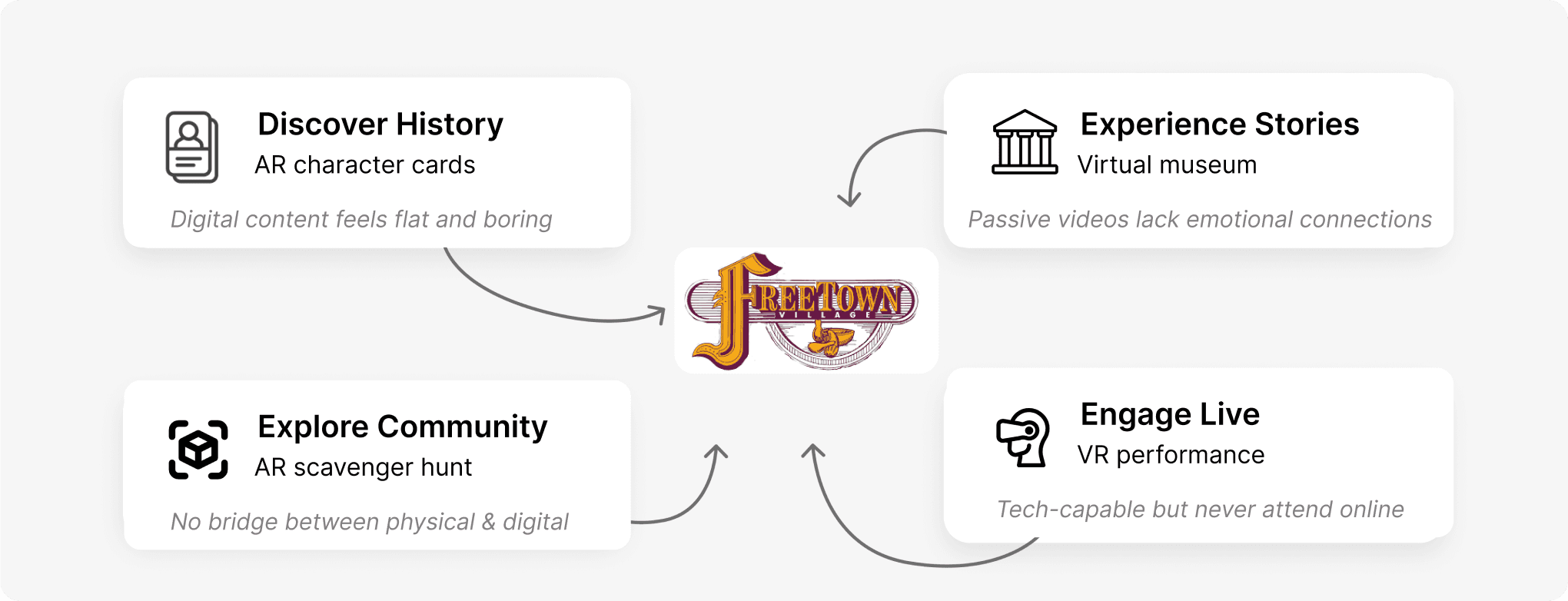
Discover

AR character cards with 3D profiles and stories
Explore

Virtual based scavenger hunt with AR rewards
Experince

Virtual museum with curated exhibits
Connect

Live VR performance in themed virtual theater
Market Opportunity
$80K-$137K
Investment Required
15-20 Months
Break-Even
Scalable
Platform
Solution
My Role & Contributions

User Research
Led research with 12 participants.
15 surveys, 3 interviews, 4 concepts tests.
Story-anchored prototyping
User Research
Led research with 12 participants.
15 surveys, 3 interviews, 4 concepts tests.
Story-anchored prototyping

Product Design
Designed complete AR & VR features set.
Created user flows for all core experiences.
Physical-digital bridge design.
Product Design
Designed complete AR & VR features set.
Created user flows for all core experiences.
Physical-digital bridge design.
Information Architecture
Created complete IA for AR/VR integration.
Designed cross-navigation.
Features discovery patterns.
Information Architecture
Created complete IA for AR/VR integration.
Designed cross-navigation.
Features discovery patterns.

System Architecture
Architecture IoT system with sensors, gateway, cloud.
Real- time analytics and tracking.
Engagement metrics & recommendations.
System Architecture
Architecture IoT system with sensors, gateway, cloud.
Real- time analytics and tracking.
Engagement metrics & recommendations.

Business Viability
Technical feasibility assessment.
Revenue model and pricing strategy.
Market sizzing and break-even analysis.
Business Viability
Technical feasibility assessment.
Revenue model and pricing strategy.
Market sizzing and break-even analysis.

Strategy & Presentation
Created pitch deck for stakeholders.
SWOT analysis and competitive positioning.
22 week development roadmap.
Strategy & Presentation
Created pitch deck for stakeholders.
SWOT analysis and competitive positioning.
22 week development roadmap.
UI Design

Impact & Reflection
User Validation
✓ 73% rarely attend online events despite 60% tech comfort (identified engagement gap)
✓ VR: "I would love to interact more with this" (immersive storytelling created emotional connection)
✓ AR: "Would love to show friends and family" (high shareability and social engagement)
Key Learnings
→ Clarity over complexity: Simple workflows outperform feature-rich but overwhelming interfaces
→ Design for accessibility first: AR reaches everyone, VR needs fallbacks (mobile VR, WebXR, 360°)
→ Story-anchored testing works: Context matters for cultural content validation
→ Physical-digital bridge essential: Tangible collectibles drive ongoing engagement beyond single event
What I'd Do Differently
→ Earlier VR environment population (avoid "too empty" theater feedback)
→ More aggressive feature simplification (catch timeline redundancy earlier)
→ Deeper AR interactivity prototyping (validate 3D artifacts interaction earlier)
More Works
©2024
More Works
©2024
ux design
Museum
Freetown village
AR/VR platform bridging physical and digital cultural experience
My role
UX Researcher, Product Designer, System Architect
Timeline
November - December 2025
Company
Freetown village Museum
Problem
People don't have a capability problem. They have a "content doesn't work" problem.
Young professionals (ages 20-35) are tech-comfortable but rarely engage with digital cultural events. Despite high technical literacy, 73% rarely or never attend online cultural experiences. Freetown Village, a 40+ year-old living history museum, struggled to reach younger audiences beyond their 25-60 person in-person performances.
Key Research Insights
Virtual Engagement Paradox
Evidence: 73% rarely attend online events despite 60% tech comfort
AR/VR created emotional resonanace passive videos
Immersion Creates Connection
Evidence: "I would love to interact more with this" - VR museum created emotional resonance
Musuem -style exploration lets users feel history, not just watch it.
Mobile First is Essential
Evidence: "Not everyone has a Meta Quest" - all have smartphones
AR via smartphones is primary access, VR is premium enhancement
Community Drives Retention
Evidence: "Would love to show friends and family" - AR scavenger moments highly shareable
Collectible cards and scavenger rewards create social engagement
Solution
Freetown village :AR/VR
Freetown Village AR/VR Platform is an immersive digital experience that bridges physical and digital worlds. Users access AR content via smartphones (character cards, heritage buildings, scavenger hunts) and VR experiences via headsets (virtual museum, live performances, emotional timelines). The platform makes Black history emotionally immersive while maintaining accessibility through mobile-first design
Value Proposition
Discover
AR character cards with 3D profiles and stories
Explore
Virtual based scavenger hunt with AR rewards
Experince
Virtual museum with curated exhibits
Connect
Live VR performance in themed virtual theater
Market Opportunity
$80K-$137K
Investment Required
15-20 Months
Break-Even
Scalable
Platform
Solution
My Role & Contributions
User Research
Led research with 12 participants.
15 surveys, 3 interviews, 4 concepts tests.
Story-anchored prototyping
Product Design
Designed complete AR & VR features set.
Created user flows for all core experiences.
Physical-digital bridge design.
Information Architecture
Created complete IA for AR/VR integration.
Designed cross-navigation.
Features discovery patterns.
System Architecture
Architecture IoT system with sensors, gateway, cloud.
Real- time analytics and tracking.
Engagement metrics & recommendations.
Business Viability
Technical feasibility assessment.
Revenue model and pricing strategy.
Market sizzing and break-even analysis.
Strategy & Presentation
Created pitch deck for stakeholders.
SWOT analysis and competitive positioning.
22 week development roadmap.
UI Design
Impact & Reflection
User Validation
✓ 73% rarely attend online events despite 60% tech comfort (identified engagement gap)
✓ VR: "I would love to interact more with this" (immersive storytelling created emotional connection)
✓ AR: "Would love to show friends and family" (high shareability and social engagement)
Key Learnings
→ Clarity over complexity: Simple workflows outperform feature-rich but overwhelming interfaces
→ Design for accessibility first: AR reaches everyone, VR needs fallbacks (mobile VR, WebXR, 360°)
→ Story-anchored testing works: Context matters for cultural content validation
→ Physical-digital bridge essential: Tangible collectibles drive ongoing engagement beyond single event
What I'd Do Differently
→ Earlier VR environment population (avoid "too empty" theater feedback)
→ More aggressive feature simplification (catch timeline redundancy earlier)
→ Deeper AR interactivity prototyping (validate 3D artifacts interaction earlier)
More Works
©2024
ux design
Museum
Freetown village
AR/VR platform bridging physical and digital cultural experience
My role
UX Researcher, Product Designer, System Architect
Timeline
November - December 2025
Company
Freetown village Museum
Problem
People don't have a capability problem. They have a "content doesn't work" problem.
Young professionals (ages 20-35) are tech-comfortable but rarely engage with digital cultural events. Despite high technical literacy, 73% rarely or never attend online cultural experiences. Freetown Village, a 40+ year-old living history museum, struggled to reach younger audiences beyond their 25-60 person in-person performances.
Key Research Insights
Virtual Engagement Paradox
Evidence: 73% rarely attend online events despite 60% tech comfort
AR/VR created emotional resonanace passive videos
Immersion Creates Connection
Evidence: "I would love to interact more with this" - VR museum created emotional resonance
Musuem -style exploration lets users feel history, not just watch it.
Mobile First is Essential
Evidence: "Not everyone has a Meta Quest" - all have smartphones
AR via smartphones is primary access, VR is premium enhancement
Community Drives Retention
Evidence: "Would love to show friends and family" - AR scavenger moments highly shareable
Collectible cards and scavenger rewards create social engagement
Solution
Freetown village :AR/VR
Freetown Village AR/VR Platform is an immersive digital experience that bridges physical and digital worlds. Users access AR content via smartphones (character cards, heritage buildings, scavenger hunts) and VR experiences via headsets (virtual museum, live performances, emotional timelines). The platform makes Black history emotionally immersive while maintaining accessibility through mobile-first design
Value Proposition
Discover
AR character cards with 3D profiles and stories
Explore
Virtual based scavenger hunt with AR rewards
Experince
Virtual museum with curated exhibits
Connect
Live VR performance in themed virtual theater
Market Opportunity
$80K-$137K
Investment Required
15-20 Months
Break-Even
Scalable
Platform
Solution
My Role & Contributions
User Research
Led research with 12 participants.
15 surveys, 3 interviews, 4 concepts tests.
Story-anchored prototyping
Product Design
Designed complete AR & VR features set.
Created user flows for all core experiences.
Physical-digital bridge design.
Information Architecture
Created complete IA for AR/VR integration.
Designed cross-navigation.
Features discovery patterns.
System Architecture
Architecture IoT system with sensors, gateway, cloud.
Real- time analytics and tracking.
Engagement metrics & recommendations.
Business Viability
Technical feasibility assessment.
Revenue model and pricing strategy.
Market sizzing and break-even analysis.
Strategy & Presentation
Created pitch deck for stakeholders.
SWOT analysis and competitive positioning.
22 week development roadmap.
UI Design
Impact & Reflection
User Validation
✓ 73% rarely attend online events despite 60% tech comfort (identified engagement gap)
✓ VR: "I would love to interact more with this" (immersive storytelling created emotional connection)
✓ AR: "Would love to show friends and family" (high shareability and social engagement)
Key Learnings
→ Clarity over complexity: Simple workflows outperform feature-rich but overwhelming interfaces
→ Design for accessibility first: AR reaches everyone, VR needs fallbacks (mobile VR, WebXR, 360°)
→ Story-anchored testing works: Context matters for cultural content validation
→ Physical-digital bridge essential: Tangible collectibles drive ongoing engagement beyond single event
What I'd Do Differently
→ Earlier VR environment population (avoid "too empty" theater feedback)
→ More aggressive feature simplification (catch timeline redundancy earlier)
→ Deeper AR interactivity prototyping (validate 3D artifacts interaction earlier)
More Works
©2024