Fashion
Personal
StylePilot
AI-Powered Fashion Styling Platform

My role
AI Product Design Intern
My role
AI Product Design Intern
Timeline
September 2024 - December 2024
Timeline
September 2024 - December 2024
Company
PM Accelerator (PMA)
Company
PM Accelerator (PMA)
Problem
People don't have a clothing problem. They have a "what to wear" problem.
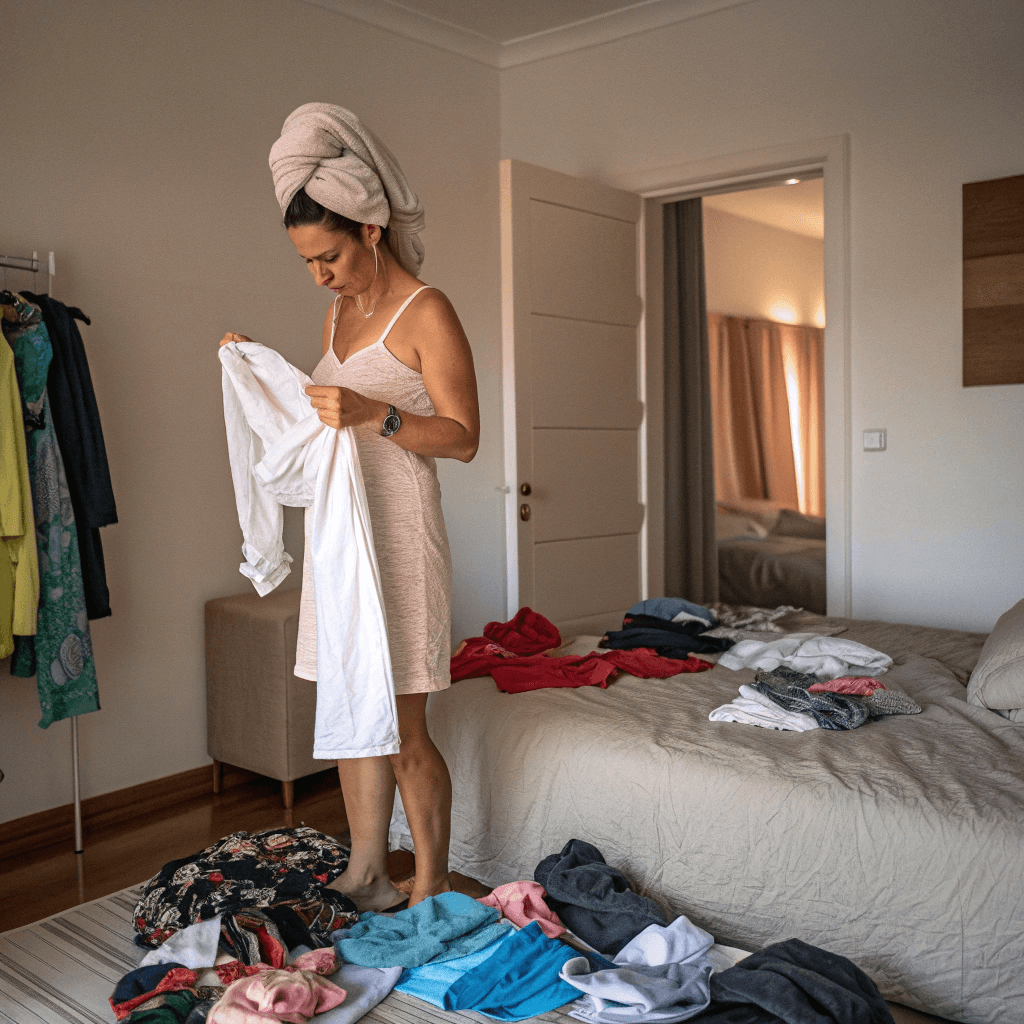
Young professionals (ages 18-40) struggle with decision fatigue when planning outfits. Despite owning full wardrobes, they spend 60+ minutes browsing before making a decision — and often give up entirely, leading to unused clothing and repeated purchases.
Key Research Insights
Decision fatigue is the primary barrier
Evidence: User spends 60+ minutes on average browsing before deciding
AI curates context-aware suggestion to reduce cognitive load.
Wardrobe reuse over new purchase
Evidence: 59% actively try to reuse existing clothes instead of buying new items
Frictionless wardrobe scanning discovers hidden outfit combinations
Sustanability matters but can't feel like sacrifice
Evidence: 71% rated sustainability as highly important but lack actionable ways
Show carbon savings as positive outcome of smart wardrobe usage
Virtual try on builds trust in AI
Evidence: 82% expressed interest in virtual try on to see outfits on their body first
Virtual try on is a trust-building mechanism for AI suggestions
Solution
StylePilot
Style Everday
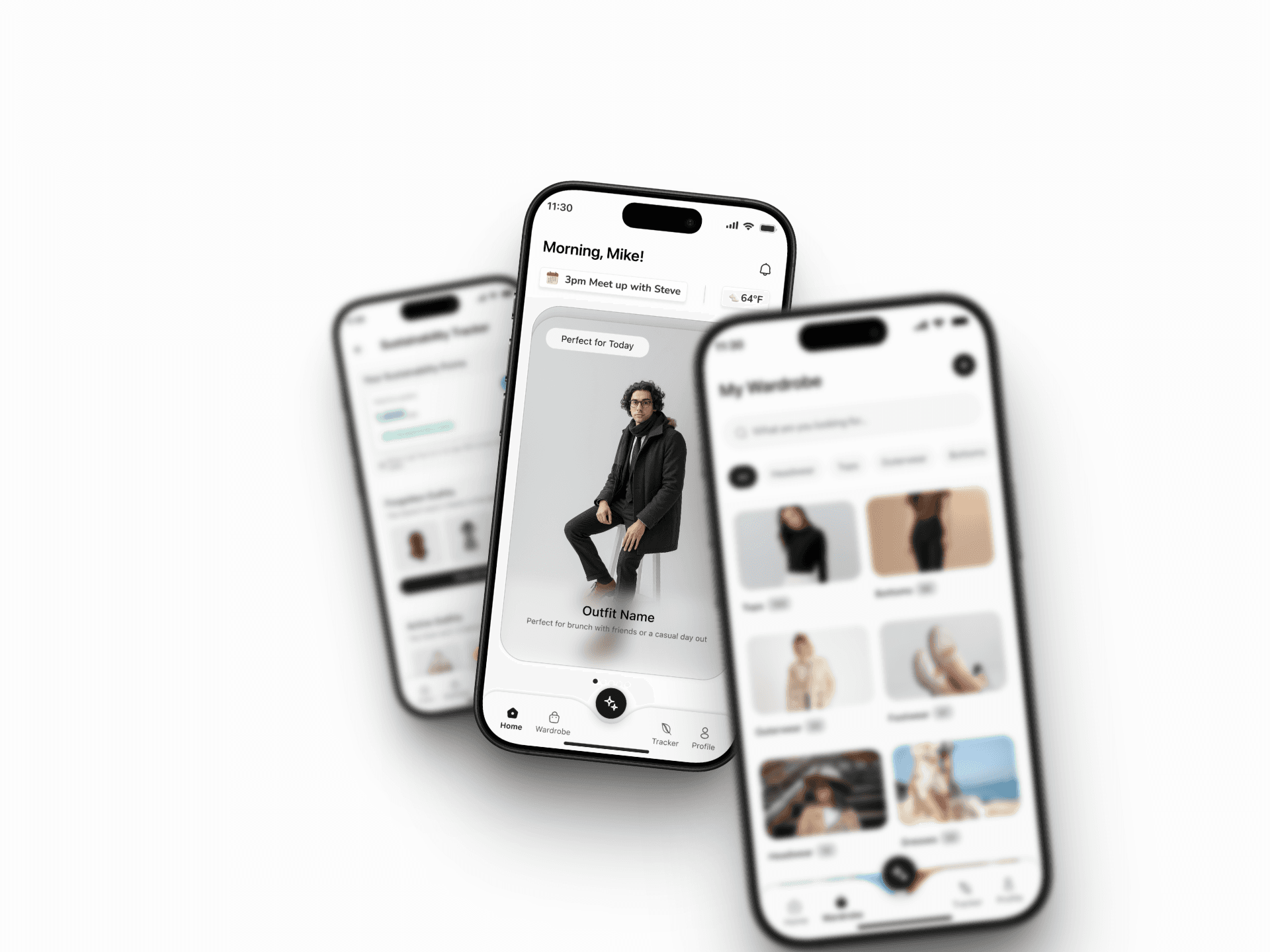
StylePilot is an AI-powered fashion assistant that turns your existing wardrobe into a personalized styling engine. Users upload photos of their clothes, and the AI instantly recognizes, categorizes, and creates outfit combinations based on mood, occasion, weather, and personal style.
Value Proposition
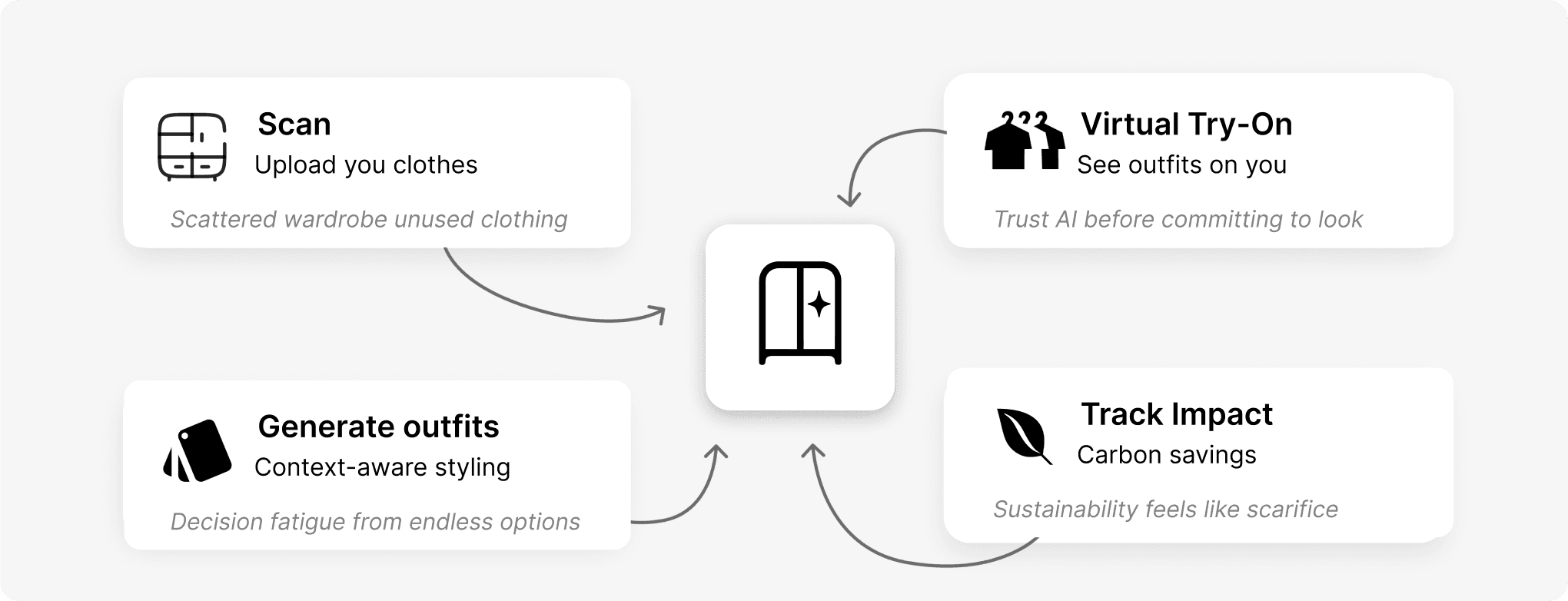
Scan

AI instant wardrobe recognition and categorize
Style

Context- aware outfit generation based on mood.
Try

Virtual try-on before wearing them.
Track

Carbon savings from reusing vs buying
Market Opportunity
$4.4B → $15B
Fashion AI Market(40% CAGR to 2030)
$440M-$880M
U.S. Wardrobe Tech, 10-20% of global
$22M-$44M
StylePilot SOM ,5-10%capture rate
Solution
My Role & Contributions

User Research
Conducted 10 of 22 interviews.
Led competitor analysis.
Journey mapped user pattern
User Research
Conducted 10 of 22 interviews.
Led competitor analysis.
Journey mapped user pattern

Information Architecture
Designed complete IA for 7 core features
Created 15+ user flows
Defined navigation hierarchy
Information Architecture
Designed complete IA for 7 core features
Created 15+ user flows
Defined navigation hierarchy

UI Design
Created 50+ screens across all features.
Designed onboarding, homepage and splash.
Minimal confident aesthetics.
UI Design
Created 50+ screens across all features.
Designed onboarding, homepage and splash.
Minimal confident aesthetics.

Prototyping
Built interactive figma prototypes
Created clickable flow for testing.
Developer handoff docs.
Prototyping
Built interactive figma prototypes
Created clickable flow for testing.
Developer handoff docs.

AI Specific Design
Designed AI chatbot interface.
Designed wardrobe scanning flows.
Trust-building mechanisms.
AI Specific Design
Designed AI chatbot interface.
Designed wardrobe scanning flows.
Trust-building mechanisms.

Design System
Established typography system.
Created component library.
Developer handoff specs.
Design System
Established typography system.
Created component library.
Developer handoff specs.
UI Design
The design: StylePilot

Impact & Reflection
User validation
✓ 68% rated wardrobe digitization as highly useful
✓ 82% expressed interest in virtual try-on feature
✓ 71% rated sustainability as highly important
✓ Expected 70% reduction in outfit planning time
Key Learnings
→ AI design requires trust-building mechanisms
→ Minimal design can project confidence
→ Context-aware styling beats generic matching
→ Sustainability must feel positive, not preachy
What I'd Do Differently
→ Earlier user testing of core flows
→ More aggressive MVP scope reduction
→ Deeper AI error state design
More Works
©2024
More Works
©2024
Fashion
Personal
StylePilot
AI-Powered Fashion Styling Platform
My role
AI Product Design Intern
Timeline
September 2024 - December 2024
Company
PM Accelerator (PMA)
Problem
People don't have a clothing problem. They have a "what to wear" problem.
Young professionals (ages 18-40) struggle with decision fatigue when planning outfits. Despite owning full wardrobes, they spend 60+ minutes browsing before making a decision — and often give up entirely, leading to unused clothing and repeated purchases.
Key Research Insights
Decision fatigue is the primary barrier
Evidence: User spends 60+ minutes on average browsing before deciding
AI curates context-aware suggestion to reduce cognitive load.
Wardrobe reuse over new purchase
Evidence: 59% actively try to reuse existing clothes instead of buying new items
Frictionless wardrobe scanning discovers hidden outfit combinations
Sustanability matters but can't feel like sacrifice
Evidence: 71% rated sustainability as highly important but lack actionable ways
Show carbon savings as positive outcome of smart wardrobe usage
Virtual try on builds trust in AI
Evidence: 82% expressed interest in virtual try on to see outfits on their body first
Virtual try on is a trust-building mechanism for AI suggestions
Solution
StylePilot
Style Everday
StylePilot is an AI-powered fashion assistant that turns your existing wardrobe into a personalized styling engine. Users upload photos of their clothes, and the AI instantly recognizes, categorizes, and creates outfit combinations based on mood, occasion, weather, and personal style.
Value Proposition
Scan
AI instant wardrobe recognition and categorize
Style
Context- aware outfit generation based on mood.
Try
Virtual try-on before wearing them.
Track
Carbon savings from reusing vs buying
Market Opportunity
$4.4B → $15B
Fashion AI Market(40% CAGR to 2030)
$440M-$880M
U.S. Wardrobe Tech, 10-20% of global
$22M-$44M
StylePilot SOM ,5-10%capture rate
Solution
My Role & Contributions
User Research
Conducted 10 of 22 interviews.
Led competitor analysis.
Journey mapped user pattern
Information Architecture
Designed complete IA for 7 core features
Created 15+ user flows
Defined navigation hierarchy
UI Design
Created 50+ screens across all features.
Designed onboarding, homepage and splash.
Minimal confident aesthetics.
Prototyping
Built interactive figma prototypes
Created clickable flow for testing.
Developer handoff docs.
AI Specific Design
Designed AI chatbot interface.
Designed wardrobe scanning flows.
Trust-building mechanisms.
Design System
Established typography system.
Created component library.
Developer handoff specs.
UI Design
The design: StylePilot
Impact & Reflection
User validation
✓ 68% rated wardrobe digitization as highly useful
✓ 82% expressed interest in virtual try-on feature
✓ 71% rated sustainability as highly important
✓ Expected 70% reduction in outfit planning time
Key Learnings
→ AI design requires trust-building mechanisms
→ Minimal design can project confidence
→ Context-aware styling beats generic matching
→ Sustainability must feel positive, not preachy
What I'd Do Differently
→ Earlier user testing of core flows
→ More aggressive MVP scope reduction
→ Deeper AI error state design
More Works
©2024
Fashion
Personal
StylePilot
AI-Powered Fashion Styling Platform
My role
AI Product Design Intern
Timeline
September 2024 - December 2024
Company
PM Accelerator (PMA)
Problem
People don't have a clothing problem. They have a "what to wear" problem.
Young professionals (ages 18-40) struggle with decision fatigue when planning outfits. Despite owning full wardrobes, they spend 60+ minutes browsing before making a decision — and often give up entirely, leading to unused clothing and repeated purchases.
Key Research Insights
Decision fatigue is the primary barrier
Evidence: User spends 60+ minutes on average browsing before deciding
AI curates context-aware suggestion to reduce cognitive load.
Wardrobe reuse over new purchase
Evidence: 59% actively try to reuse existing clothes instead of buying new items
Frictionless wardrobe scanning discovers hidden outfit combinations
Sustanability matters but can't feel like sacrifice
Evidence: 71% rated sustainability as highly important but lack actionable ways
Show carbon savings as positive outcome of smart wardrobe usage
Virtual try on builds trust in AI
Evidence: 82% expressed interest in virtual try on to see outfits on their body first
Virtual try on is a trust-building mechanism for AI suggestions
Solution
StylePilot
Style Everday
StylePilot is an AI-powered fashion assistant that turns your existing wardrobe into a personalized styling engine. Users upload photos of their clothes, and the AI instantly recognizes, categorizes, and creates outfit combinations based on mood, occasion, weather, and personal style.
Value Proposition
Scan
AI instant wardrobe recognition and categorize
Style
Context- aware outfit generation based on mood.
Try
Virtual try-on before wearing them.
Track
Carbon savings from reusing vs buying
Market Opportunity
$4.4B → $15B
Fashion AI Market(40% CAGR to 2030)
$440M-$880M
U.S. Wardrobe Tech, 10-20% of global
$22M-$44M
StylePilot SOM ,5-10%capture rate
Solution
My Role & Contributions
User Research
Conducted 10 of 22 interviews.
Led competitor analysis.
Journey mapped user pattern
Information Architecture
Designed complete IA for 7 core features
Created 15+ user flows
Defined navigation hierarchy
UI Design
Created 50+ screens across all features.
Designed onboarding, homepage and splash.
Minimal confident aesthetics.
Prototyping
Built interactive figma prototypes
Created clickable flow for testing.
Developer handoff docs.
AI Specific Design
Designed AI chatbot interface.
Designed wardrobe scanning flows.
Trust-building mechanisms.
Design System
Established typography system.
Created component library.
Developer handoff specs.
UI Design
The design: StylePilot
Impact & Reflection
User validation
✓ 68% rated wardrobe digitization as highly useful
✓ 82% expressed interest in virtual try-on feature
✓ 71% rated sustainability as highly important
✓ Expected 70% reduction in outfit planning time
Key Learnings
→ AI design requires trust-building mechanisms
→ Minimal design can project confidence
→ Context-aware styling beats generic matching
→ Sustainability must feel positive, not preachy
What I'd Do Differently
→ Earlier user testing of core flows
→ More aggressive MVP scope reduction
→ Deeper AI error state design
More Works
©2024